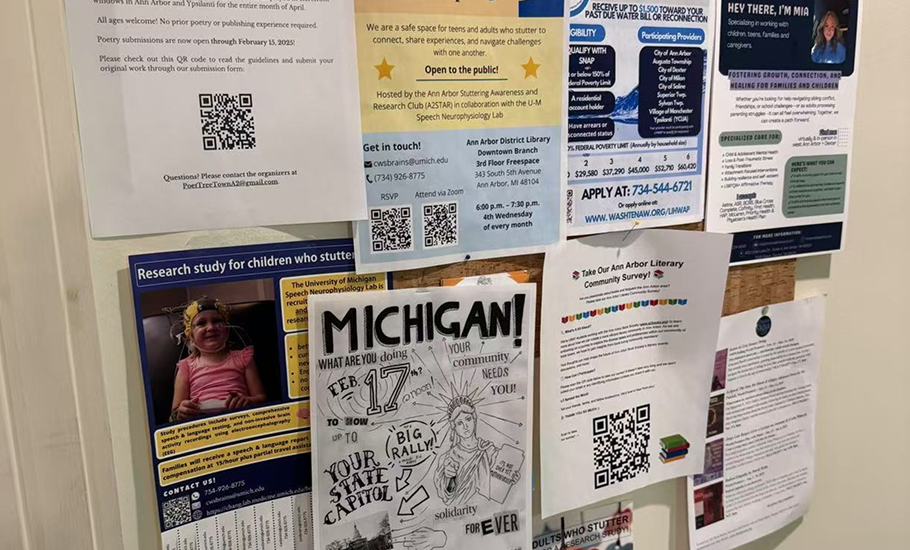
Project Image

Community Box

Course: Advanced Studio: Service Design and Urban Needs

Professors: Alex Johnston

Teammates: Joshua Nicholson, Trini Sernas, Jaden Overvoorde

Responsibilities:

  • Designed all visual elements of the Community Box
  • Prototyped the website
  • Interviewed small business owners for primary research

Skills and tools:

  • Qualitative research
  • Service Design for a certain user group's certain opportunity space
  • Figma, Pandas, NumPy

Methodology:

Applying service design principles to a real-world urban challenge, producing a solution that can be prototyped, piloted, and measured.

Third places, cafes, bookstores, markets, anchor community life, yet rising costs and the pull of delivery apps erode their margins and foot traffic. This project proposes a shared, lightweight solution that converts diffuse neighborhood affection into recurring revenue. By aggregating small contributions from multiple “Third-Place Businesses (TPBs),” the box helps them compete with chains, clears inventory, and channels subscribers back into spaces, using convenience itself as a civic infrastructure.

Problem Statement


Due to rising rents and financial instability, many local businesses compete with high-value chains such as Starbucks, Dunkin’, Barnes and Noble, etc. While corporate chains have implemented strategies to maximize profits, local businesses are forced into an impossible situation: maintain their status as a community third place or adapt in order to financially compete.

Desk Research


What is the context?

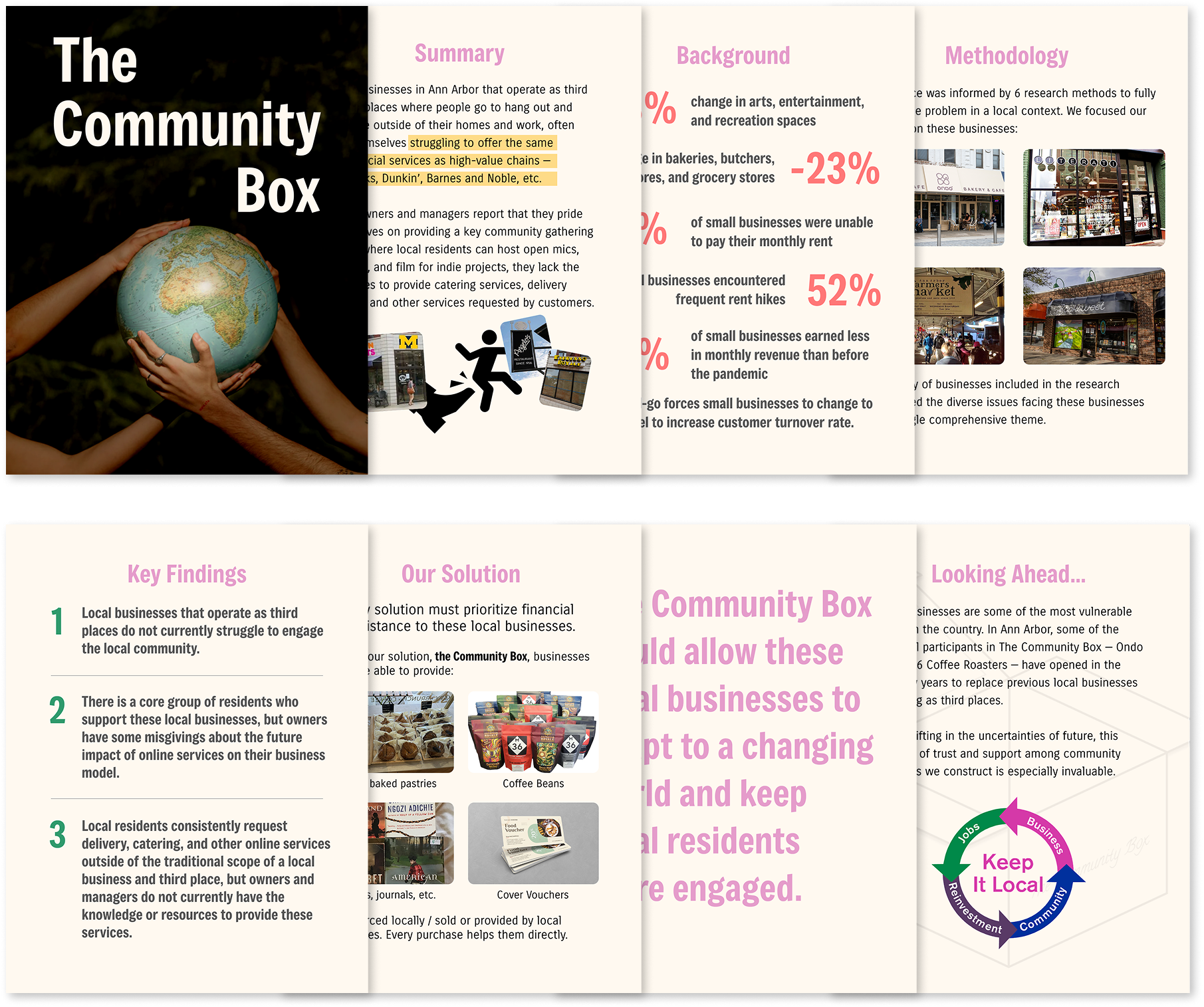
  • -18% change in arts, entertainment, and recreation spaces
  • -23% change in bakeries, butchers, corner stores, and grocery stores
  • 41% of small businesses were unable to pay their monthly rent
  • 52% of small businesses encountered frequent rent hikes
  • 72% of small businesses earned less in monthly revenue than before the pandemic

What is a third place?

“The third place is not home and not work, but instead one of the physical settings that have throughout history encouraged a sense of warmth, conviviality, and that special kind of human sustenance we call community. These settings include cafés, taverns, libraries and hair salons, where people from different walks of life gather to hang out in an informal atmosphere.” - Ray Oldenburg, Sociologist


Why it matters?

“Diminished social infrastructure can exacerbate societal perils including isolation, crime, addiction, sociopolitical polarization, inequality, and even climate change.” - National Institute of Health (2019)


Shared Information in a Third Place

Insights

What is the context?

  • The grab-and-go business model becomes a norm for TPBs, whose use of third places declined.
  • Third spaces play a key role in community building - they are safe spaces for resident engagement.
  • Potential solutions elsewhere have focused on direct financial assistance for TPBs.

Observations and Autoethnography


At this stage of inquiry, we focus on non-participant research for insights on customers’ usage of third places and gain more understanding of how the community view and interact with third places.


Observations

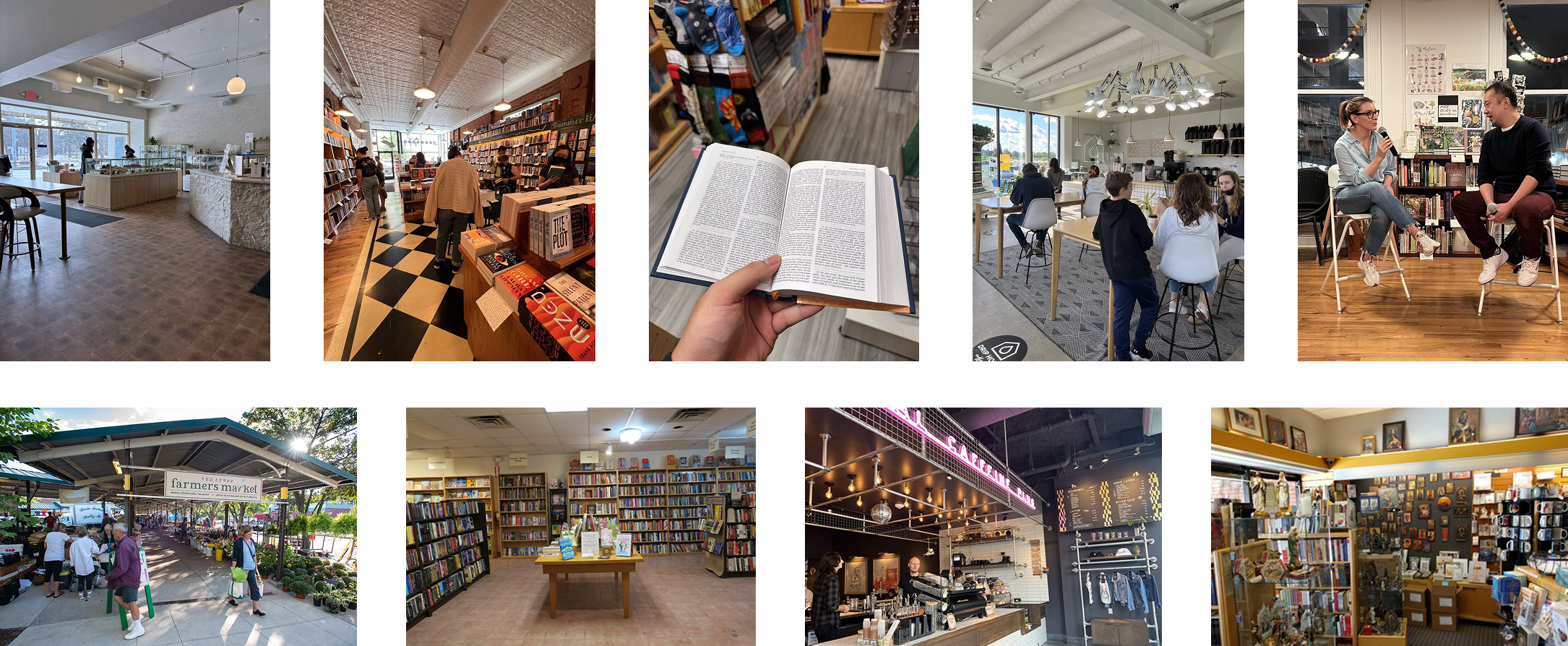
At sites including Ondo Bakery, Literati Bookstore, Drip House, Misfit Society Coffee Club, Ann Arbor Farmers Market, Our Lady of Grace Bookstore, Booksweet, etc., we observed people using the space and found out that:

  • Events tend to bring more people into the space than standard days, such as a book club event.
  • Popularity depends on location and amenities. Ondo Bakery was full while Driphouse was not.
  • Atmosphere matters. Seating and a comely aesthetic play a role in usage of the third place.

9 images of sites we visited

Sites we visited

Autoethnography

We engaged with the Ann Arbor Farmer’s Market, Misfit Society Coffee, M-36, Our Lady of Grace Bookstore, and Booksweet as if we were an average resident to reflect our interaction with the space.

  • Comfort and amenities shape engagement; cafés invited long stays, while the market and bookstores saw quicker, purpose-driven visits.
  • Events and nearby attractions drive traffic; book clubs, mass services, and community gatherings boosted foot traffic across spaces
  • Social interaction reflects the space; cafés fostered quiet productivity, markets encouraged brief exchanges, and bookstores created pockets of conversation

Interviews


Our interview covered factors impacting businesses, usage of their space, and how they view their business’ role in the community. Our participants include:

  • Stephanie Stauffer, Director of the Ann Arbor Farmer’s Market
  • Isabella Greenman, Manager of Ondo Bakery
  • Min Kyu Kim, Owner of Ondo Bakery
  • Hailey Gustafson, Owner of Literati

Through these in-depth interviews with the owners and brief interviews with users of the space, we derived these insights:

  • Ann Arbor businesses don’t struggle to engage the community as a third place
  • Many owners view themselves as important pillars in the community and have no problem allowing residents to host events in their space.
  • The rise in online shopping, delivery, and other forms of e-commerce have disrupted the business model of some TPBs.

Quote

“It’s going to be interesting to me when some of the new developments around the market open. Some people think that it’s going to be great and there will be all these new customers. I think people are just going to get Amazon food delivery, I’m not convinced that they’re going to be going to the Farmer’s Market.” - Stephanie Stauffer, Director of the Ann Arbor Farmer’s Market

Co-creative Workshops


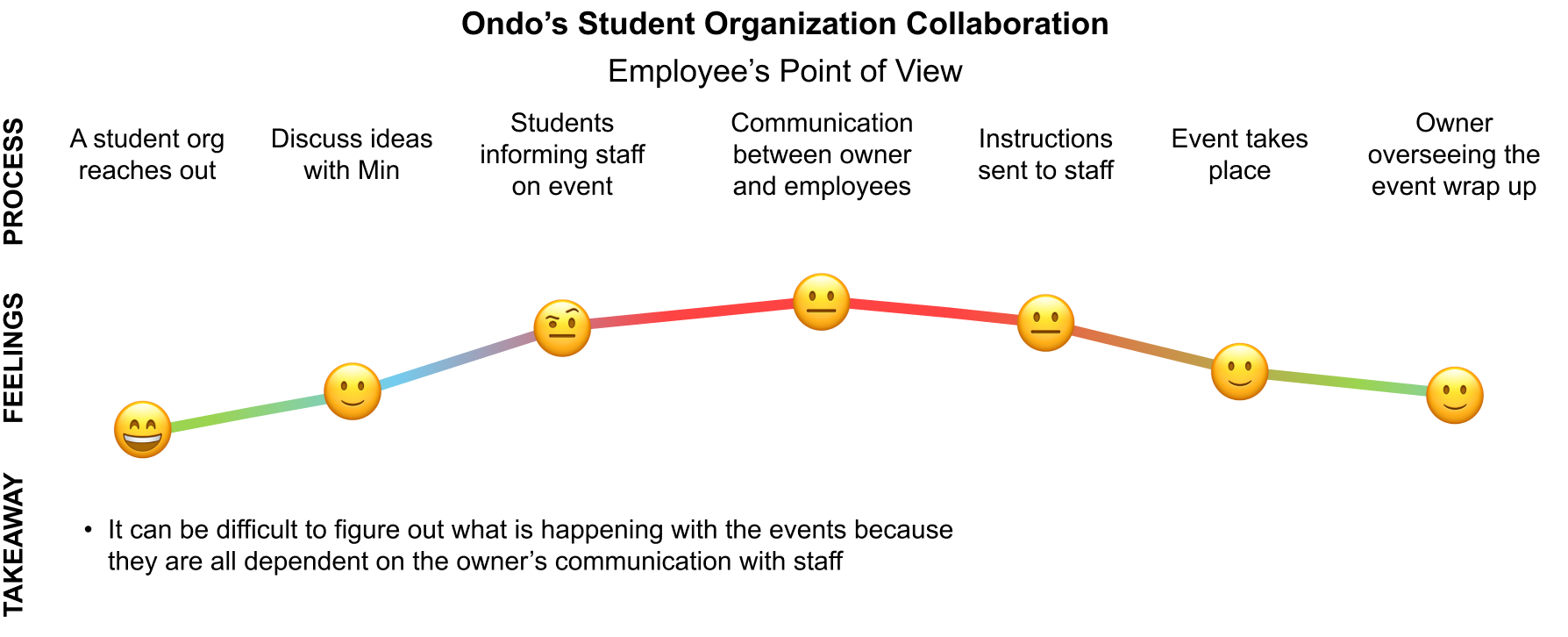
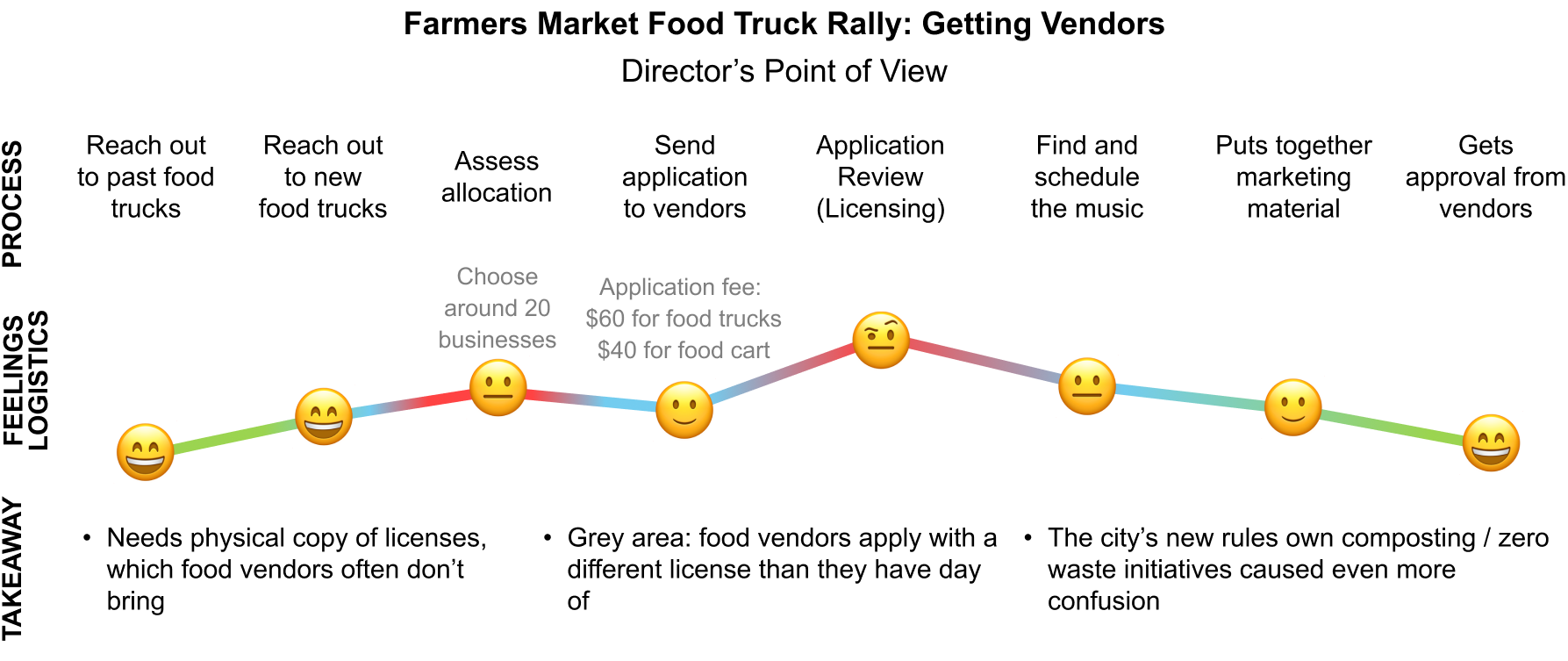
We conducted workshops with Ann Arbor Farmer’s Market and Ondo Bakery to better understand the process that goes into organizing and planning community events at their respective third places. We produced journey maps based on our findings.


9 images of sites we visited

9 images of sites we visited


Designing the Service "Community Box"


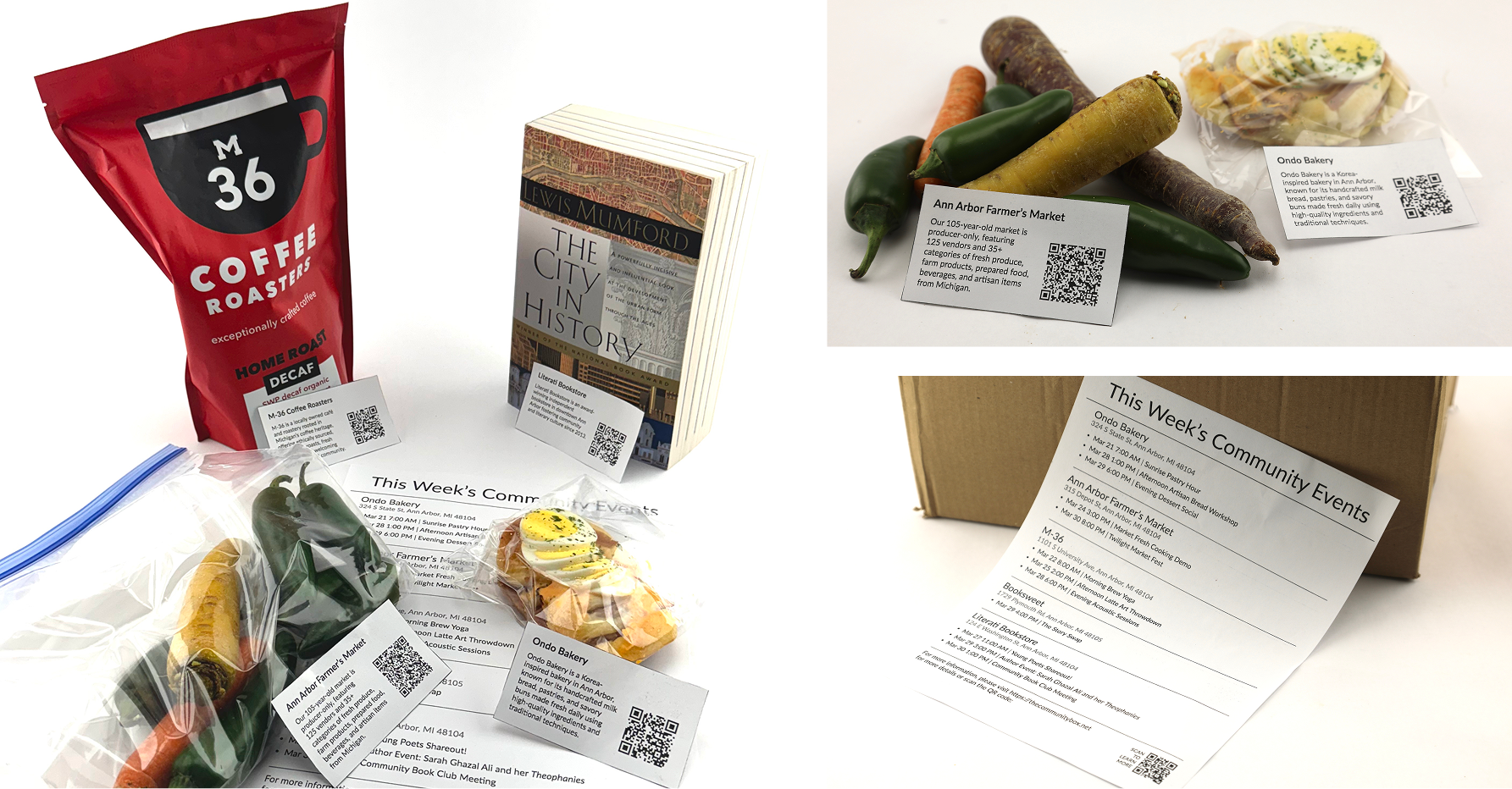
The Community Box is a curated subscription box featuring products from local, small businesses helping customers discover hidden gems while supporting local businesses and their functions as urban third places - in a convenient way.


What can users get in a box?


items users get

Promo photos for the Community Box


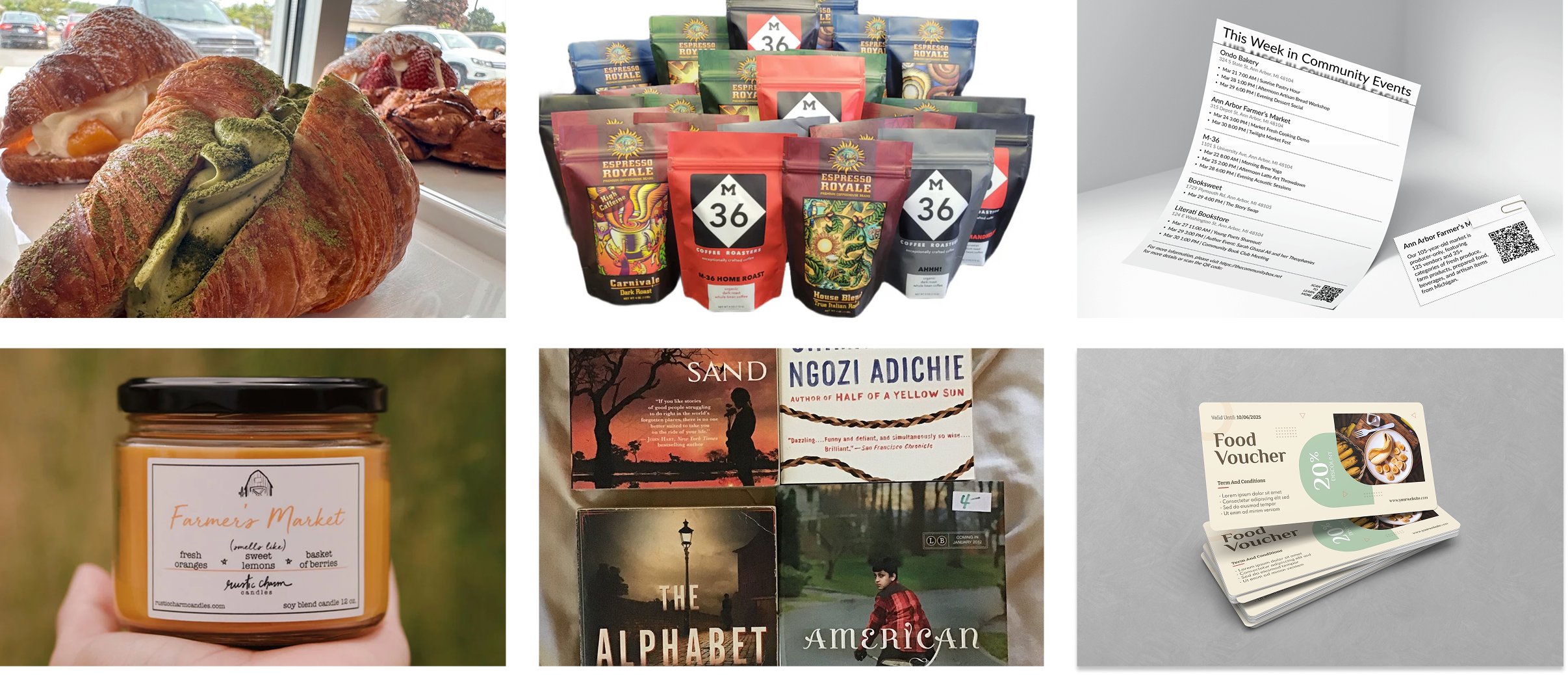
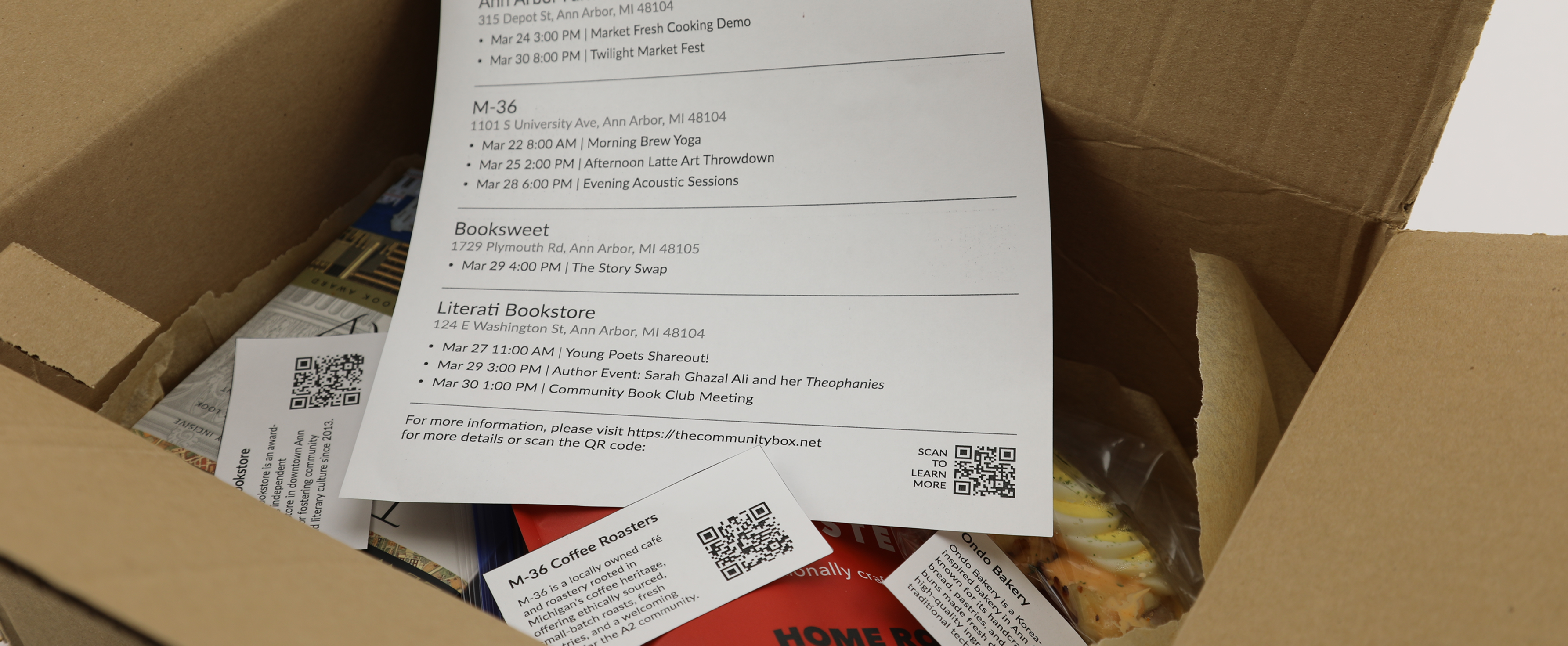
This includes fresh pastries, books or journals, coffee beans, etc. alongside several coupons to be used in-store, a list of upcoming events, and “name cards” of businesses.


items users get

A few examples of what users receive in a Community Box


Website for Third Place Businesses

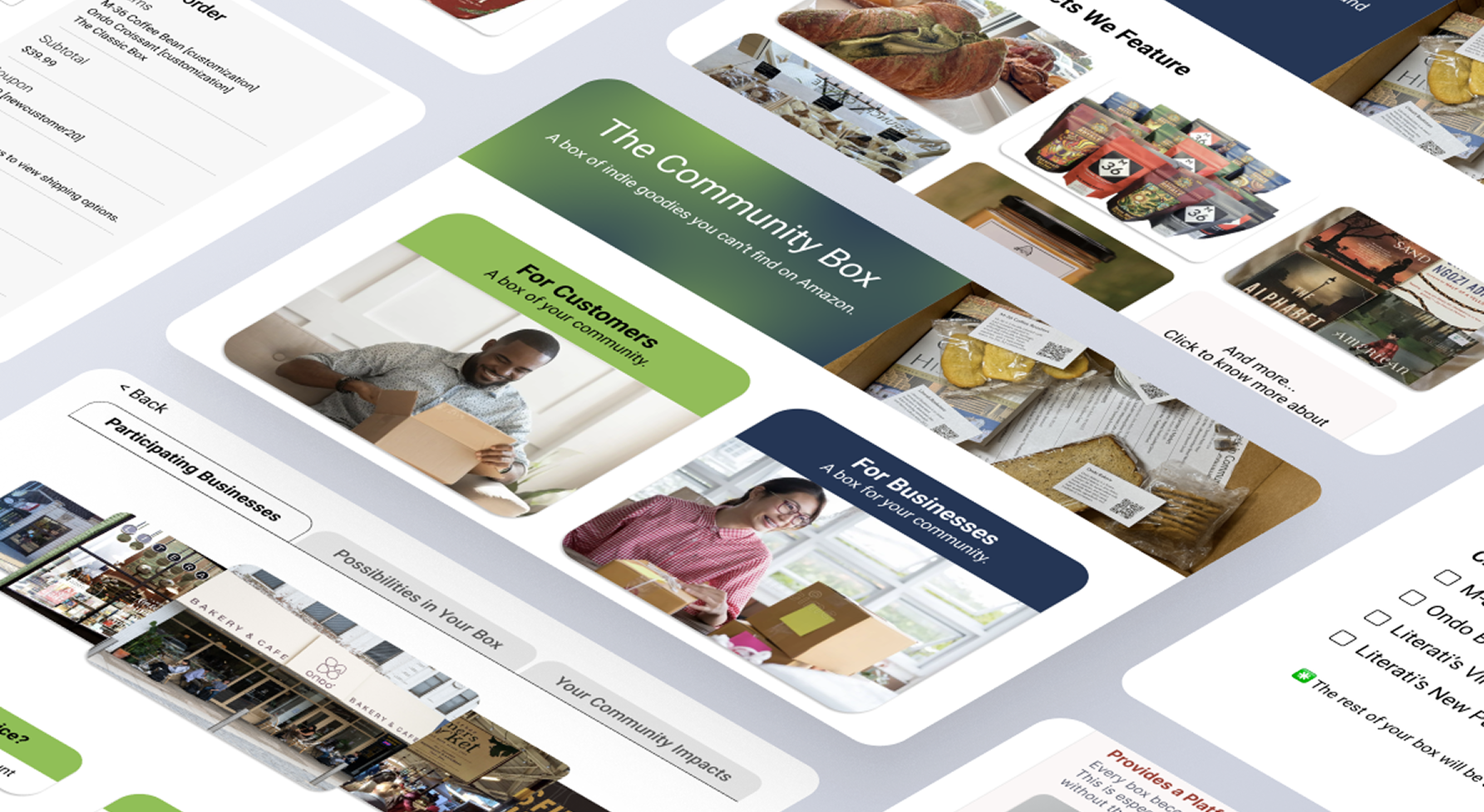
We also designed an information and registration portal for both TPBs and community members that are willing to opt into the service.


screenshot of the image

Click the above image to access a clickthrough of the website


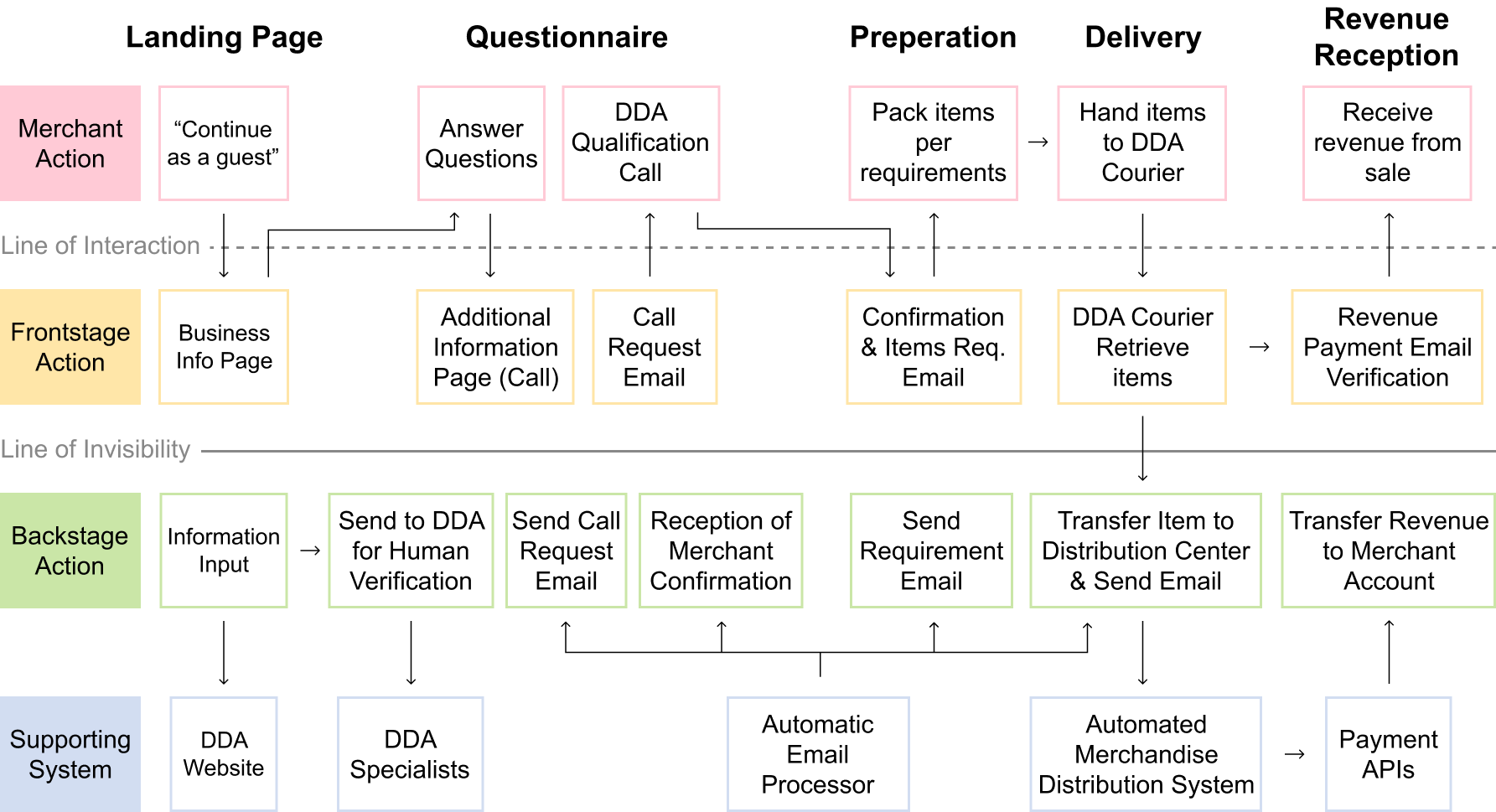
Service Blueprint

Here is a map of how this service works for a Third Place Business:


9 images of sites we visited


User Journey - An Example

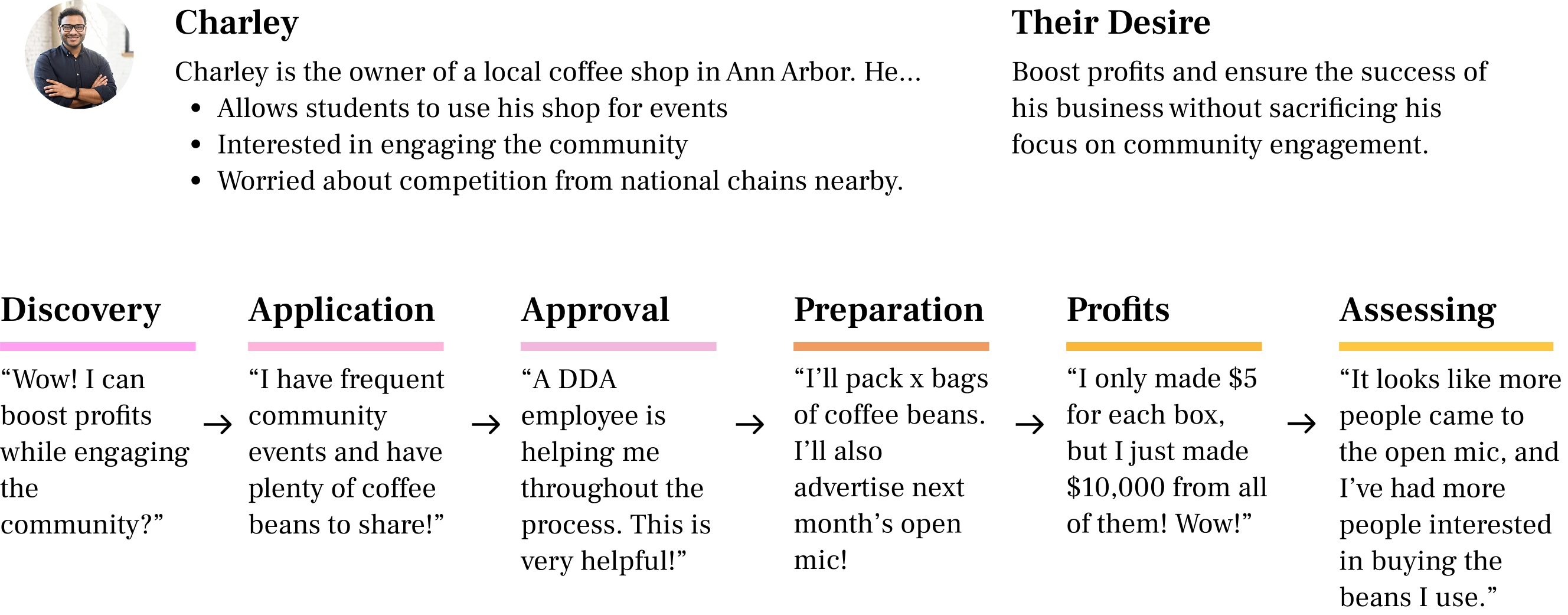
We have Charley here to demonstrate the journey of using the Community Box service.


Charley's user journey

Piloting


Cost and Benefit Analysis and Pilot Finances


Charley's user journey

Piloting and Feedback Cycle

A tentative piloting timeline might look like this for the Community Box:


Timeline for piloting


Community and Third Place Business Feedback

Of course, before this proposed pilot, we asked what the Ann Arbor community and owners/managers of third place businesses think. Here are what a member of our community and a TPB owner thinks:

Astrid | Student involved in local events
  • I like getting a lot of products delivered straight to my door, but I won’t buy if it’s cost prohibitive.
  • I’d probably buy this to stay connected to the community. It brings you into the A2 community.

Hilary | Owner of Literati

  • Likes: Our service can increase their popularity, clear their accumulating inventory, and low-cost.
  • Concerns: Profit margin might be thin and might not meet their expectations.
  • Ideas: They discount to clear inventory while we maintain comparable margins plus free marketing.


Policy Memo

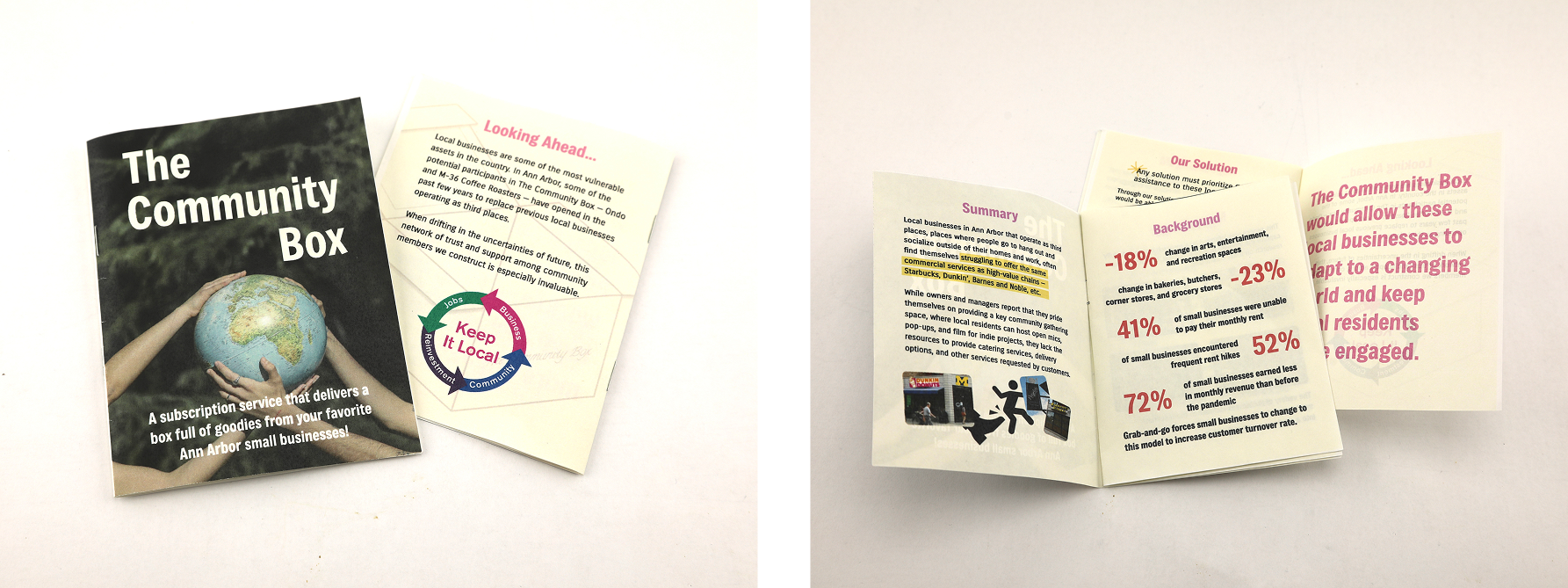
We also developed a policy memo to spread the information for our sponsors and potential Third Party Businesses to convince them into supporting or participating in the service.


policy memo scan


policy memo photos

Next Steps


What we need to do after the class ends in order to push this project forward includes:

  • Reach out to Downtown Development Authority (DDA) and other potential sponsors regarding the collaboration
  • Stakeholder meetings with participating merchants & customer representatives
  • Negotiate with delivery providers
  • Adjust key elements such as pricing based on client feedback